
What Is a Manufacturer's Sales Rep? A Business Owner's Guide
If you're trying to scale distribution without exploding your payroll, understanding what is a manufacturer sales rep could be the most important strategic decision you make this year. These are not internal employees, not order takers, and not interchangeable with any generic salesperson you'd hire off a job board. A manufacturer sales representative is an independent contractor who sells your products on commission, brings an existing buyer network, and operates their own business. That distinction changes everything about how you recruit, compensate, and manage them.

Key takeaways
Independent contractor status
Manufacturer reps are not employees. They run their own businesses and cover their own expenses.
Commission-only compensation
Reps typically earn 2% to 10% of sales, which costs less than a full internal salesforce.
Multiple product lines
Most reps carry 5 to 8 complementary lines, making your product's fit with their portfolio critical.
Long sales cycle expertise
Industrial reps specialize in 6 to 18 month sales cycles that require technical knowledge and buyer trust.
Contract clarity is non-negotiable
Poorly written rep agreements are the leading cause of expensive disputes and broken partnerships.
What a manufacturer sales rep actually is
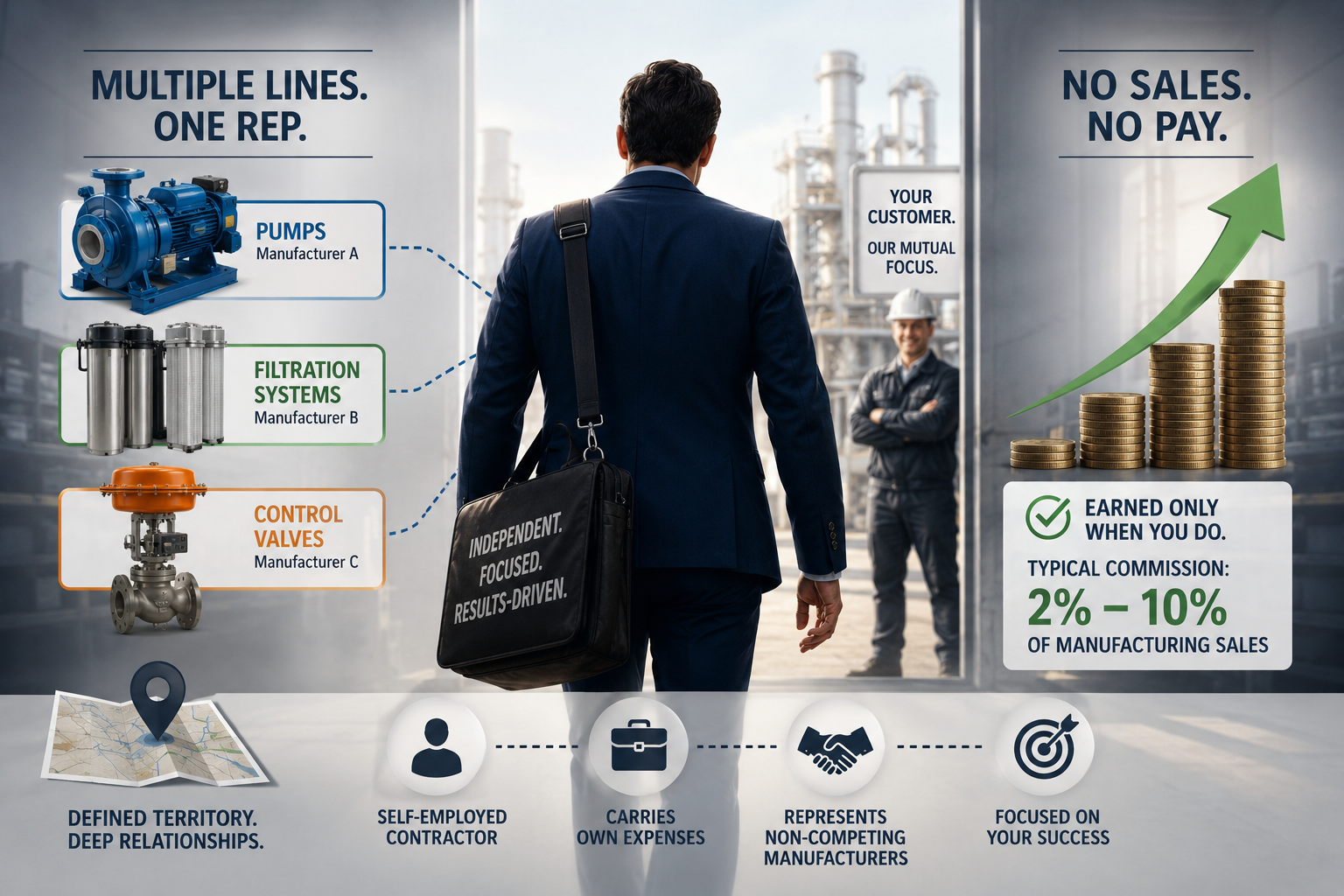
A manufacturer sales representative, also called a manufacturer's rep or rep agent, is an independent contractor who sells a manufacturer's products to buyers within a defined territory. They are not on your payroll. They pay their own expenses, manage their own schedules, and carry their own business liability. You pay them only when they generate sales.
This distinction from an employee is not just legal. It fundamentally changes the economic model. When you work with self-employed Manufacturer's reps you are entering a business-to-business partnership, not an employer-employee relationship.
Here is what separates a manufacturer rep from a standard salesperson:
- Territory ownership: Reps typically cover a specific geographic region and develop deep buyer relationships within it over years, sometimes decades.
- Portfolio management: Most manufacturer's reps carry diverse, yet complementary product lines that do not compete with each other, allowing them to offer buyers a curated set of solutions in a single sales call.
- Self-funded operations: Travel, samples, marketing materials, and office costs come out of the rep's own pocket, not yours.
- Outside sales focus: Unlike inside sales reps who work from a desk, manufacturer reps are typically field-based, attending trade shows, visiting distributor locations, and meeting buyers face to face.
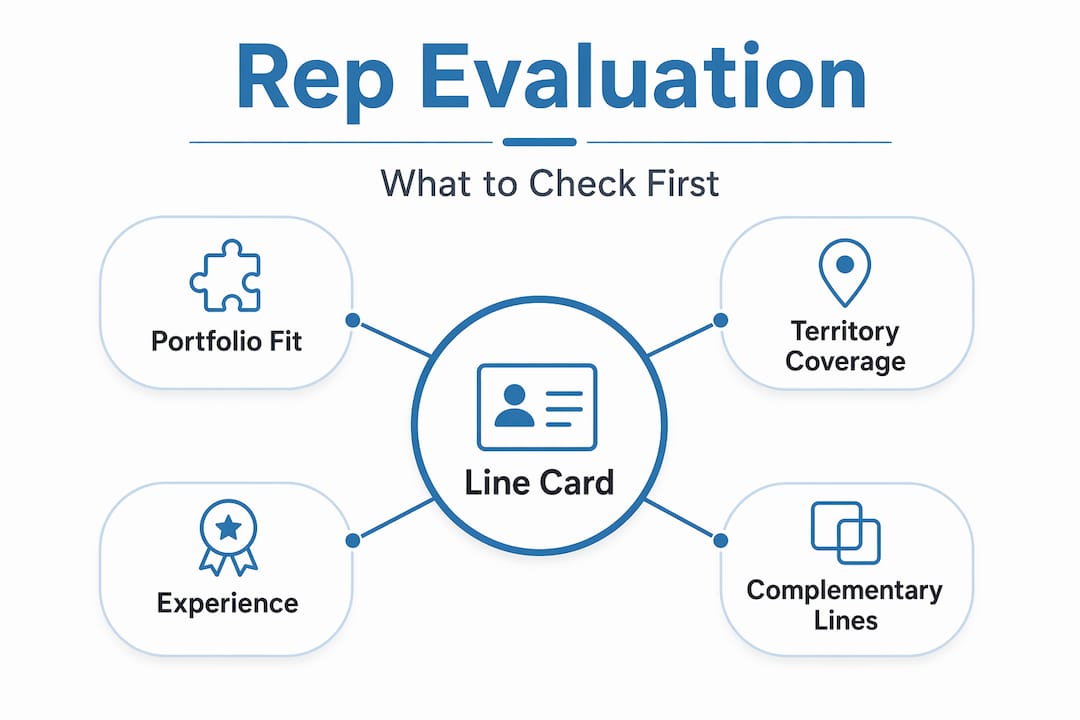
Pro Tip: When evaluating a rep, ask for their current line card. If your product does not complement what they already sell, you will struggle to get their attention regardless of commission rate.
Compensation structures and what they actually cost you
The financial model behind manufacturer reps is one of the most misunderstood aspects of the role. Business owners often see the commission rate and assume it is expensive. The reality is the opposite.
Commission rates typically range from 2% to 10% of net sales, depending on product complexity, margin structure, and the effort required to close deals. Yes, that rate is higher than what you would pay an internal salesperson on commission, which usually runs 2% to 5%. But the comparison is incomplete without accounting for what you do not pay: base salary, benefits, payroll taxes, expense reimbursements, training costs, and management overhead.
Internal Sales Rep Costs
- Base salary: $60,000 to $100,000+ per year
- Benefits and payroll taxes
- Expense reimbursement
- Commission rate: 2% to 5% of sales
- 3 to 6 months minimum time to productivity
Manufacturer Rep Costs
- No base salary
- No benefits or payroll taxes
- No expense reimbursement
- Commission rate: 2% to 10% of sales
- Faster productivity due to existing territory relationships
The math favors reps in most early-stage and mid-market scenarios. You get field coverage in a territory without fixed costs, and your distribution scales without upfront capital. The rep is motivated because their income is entirely tied to performance. That alignment of incentives is the core value of the model.
Pro Tip: Structure your commission rate to reflect the actual sales cycle length. A product that takes 12 months to close needs a rate that keeps the rep engaged through the pipeline, not just at the finish line.
Manufacturer Reps In Complex Industrial Sales
This is where the role of a sales rep becomes genuinely strategic rather than transactional. In industrial, capital equipment, and technical product categories, the manufacturer sales representative is not just a person who makes calls. They are a domain expert with years of relationship capital in a specific buyer community.
Industrial sales cycles commonly run 6 to 18 months, involving multiple decision makers, technical specification reviews, and procurement processes that require patience and expertise. A rep who has been calling on the same engineers and purchasing managers for a decade brings something no amount of cold outreach can replicate: trust.
Manufacturers often err by treating industrial sales like generic B2B sales, underestimating the technical expertise and relationship capital that manufacturer reps bring.
What makes industrial reps different from general sales professionals:
- They understand technical product specifications and can speak credibly with engineers, not just buyers.
- They know which accounts are worth pursuing and which are not, saving you months of wasted effort.
- They have existing access to distributor networks, buying groups, and specification writers who influence purchasing decisions long before an order is placed.
- They can get your product specified into a project early in the design phase, which is where real competitive advantage is built.
The manufacturer rep duties in this context go well beyond closing orders. They include spec activity, product demonstrations, technical training for distributor staff, and relationship maintenance across an account base that took years to build. When you hire a rep in an industrial category, you are effectively acquiring their network.
How to Become a Manufacturer’s Rep Companies Actually Prioritize
It's important for a company to always remember why manufacturer's reps become independent in the first place. A lot of manufacturers assume that once they sign an independent sales rep, the hard work is done. In reality, that’s usually where the problems begin. Simply onboarding reps, sending a few brochures, and expecting immediate sales rarely works.
Independent sales reps carry multiple product lines at the same time. On every sales call, they’re making decisions about which products deserve attention, which companies are easiest to work with, and which opportunities are most likely to close. If your company creates friction, your product quickly falls down the priority list.
The onboarding experience matters more than most businesses realize. The first few months determine whether a rep believes your company is serious about supporting the partnership. Reps need clear positioning, strong marketing collateral, fast access to product information, and confidence that you’ll respond quickly when prospects ask questions. Delayed communication kills momentum fast.
Reliable commission payments are equally critical. Experienced reps avoid companies with unclear payment structures, inconsistent reporting, or delayed payouts. Your commission agreement should clearly define when commissions are triggered, how they’re tracked, and exactly when reps will be paid. Transparency builds trust, and trust keeps your line active in the field.
Manufacturers should also understand that reps naturally focus more energy on opportunities that generate the best return for their time. Incentives such as performance bonuses, accelerated commissions on new business, sales competitions, or marketing support can significantly increase rep engagement and visibility within their territories.
Operational efficiency matters too. Slow quotation turnaround times, pricing confusion, inventory issues, or complicated ordering systems don’t just frustrate customers — they directly affect the rep’s reputation. Independent sales professionals want principals that make selling easy, not companies that create unnecessary obstacles during the sales process.
Finally, strong rep relationships require ongoing communication without becoming overly controlling. The best manufacturer-rep partnerships operate collaboratively. Regular updates, territory discussions, shared market feedback, and accessible leadership all help reps feel invested in the long-term success of the partnership. Companies that consistently support their reps are usually the ones that receive the most attention in the marketplace.
Contract considerations that protect both parties
The partnership between a manufacturer and a rep is only as strong as the manufacturer's rep contractual agreement behind it. This is an area where many business owners get into serious trouble, often because they use generic templates without understanding what the clauses actually mean.
Manufacturer-rep agreements frequently contain clauses that create significant legal and financial exposure if the relationship breaks down. Disputes over post-termination commissions, performance standards, and product liability are common. A real-world example: a lighting rep recently sued a manufacturer over losses tied to failed custom fixtures, with the outcome hinging entirely on contract language both parties had glossed over at signing.
Territory
Define geographic boundaries and any named accounts that are excluded.
Commission terms
Define the rate, calculation basis, and when commissions are earned versus paid.
Termination clause
Define required notice periods and post-termination commission obligations.
Performance standards
Define minimum activity or sales thresholds and consequences for missing them.
Product liability
Define who bears responsibility for product defects that affect the rep's accounts.
Two structural models are worth understanding before you sign anything. In a standard representation agreement, the rep sells on your behalf and you invoice the customer directly. In a buy/sell model, the rep purchases inventory and resells it, taking on more risk but also more margin. Most manufacturer reps operate under the first model.
Standard form rep contracts are primary risk-management documents and must be negotiated carefully. Do not treat them as formalities. Get a commercial attorney involved, particularly around termination and post-sale commission language.
Pro Tip: Always define what happens to pipeline commissions if you terminate the relationship. A rep who spent 14 months working a deal that closes 30 days after termination has a legitimate grievance if your contract is silent on this.
How to find, onboard, and manage manufacturer reps effectively
Knowing what does a sales rep do is one thing. Building a productive partnership with one requires a different set of skills. The sales rep job description you put in front of candidates needs to reflect the reality of your product, your sales cycle, and your territory expectations.
Here is a practical framework for engaging manufacturer reps:
- Define your ideal rep profile before you recruit. Identify the product categories your rep should already be selling, the buyer types they should know, and the territory you need covered. Competency-based evaluations significantly reduce hiring failure compared to gut-feel assessments.
- Audit their current line card. Your product needs to fit naturally alongside what they already sell. A rep carrying HVAC controls is a natural fit for a building automation product. They are not a fit for consumer electronics.
- Set realistic ramp expectations. Industrial sales require patience and compensation structures that support reps through long cycles. Do not expect revenue in month three if your typical sales cycle is 12 months.
- Measure pipeline activity, not just closed sales. Track spec submittals, quote activity, and account introductions during the ramp period. These are leading indicators of future revenue, not lagging ones.
- Invest in technology for collaboration. Rep order management platforms give both parties visibility into quoting workflows and sales activity, reducing friction and improving accountability without micromanagement.
- Treat onboarding as a mutual investment. Provide technical training, marketing materials, and clear product positioning. A rep who cannot explain your product confidently will deprioritize it in favor of lines they know better.
If you are not sure whether you are ready to bring on your first independent sales partner, the readiness checklist from Commissioncrowd is a practical starting point before you commit.
My perspective on what most manufacturers get wrong
I have seen manufacturers approach rep partnerships with the same mindset they bring to hiring a vendor. They want results fast, they want control, and they treat the contract as a formality. That approach fails consistently, and it is expensive when it does.
The manufacturers who get this right understand one thing: a good rep is running their own business. They have a portfolio of products, a book of accounts, and a reputation they have built over years. Your product is one line on their card. Whether it becomes a priority line depends entirely on how well you support them, how clearly your contract protects mutual interests, and how realistic your expectations are about timeline.
In my experience, the biggest mistake is expecting transactional behavior from a relationship-driven role. A rep who has spent 10 years building trust with a specific set of buyers is not going to burn that trust to push a product they do not believe in. That is actually a feature, not a flaw. It means the reps who do champion your product are doing it because they genuinely think it fits their accounts.
The competitive advantage here is real. A manufacturer who partners with three well-chosen reps in three territories can access buyer networks that would take an internal team years and significant capital to build. But only if the partnership is structured correctly from the start.
Find qualified manufacturer reps through Commissioncrowd
If you are ready to put this into practice, Commissioncrowd gives you direct access to a network of vetted, commission-only sales professionals and Manufacturer's reps who are actively looking for new product lines to represent.
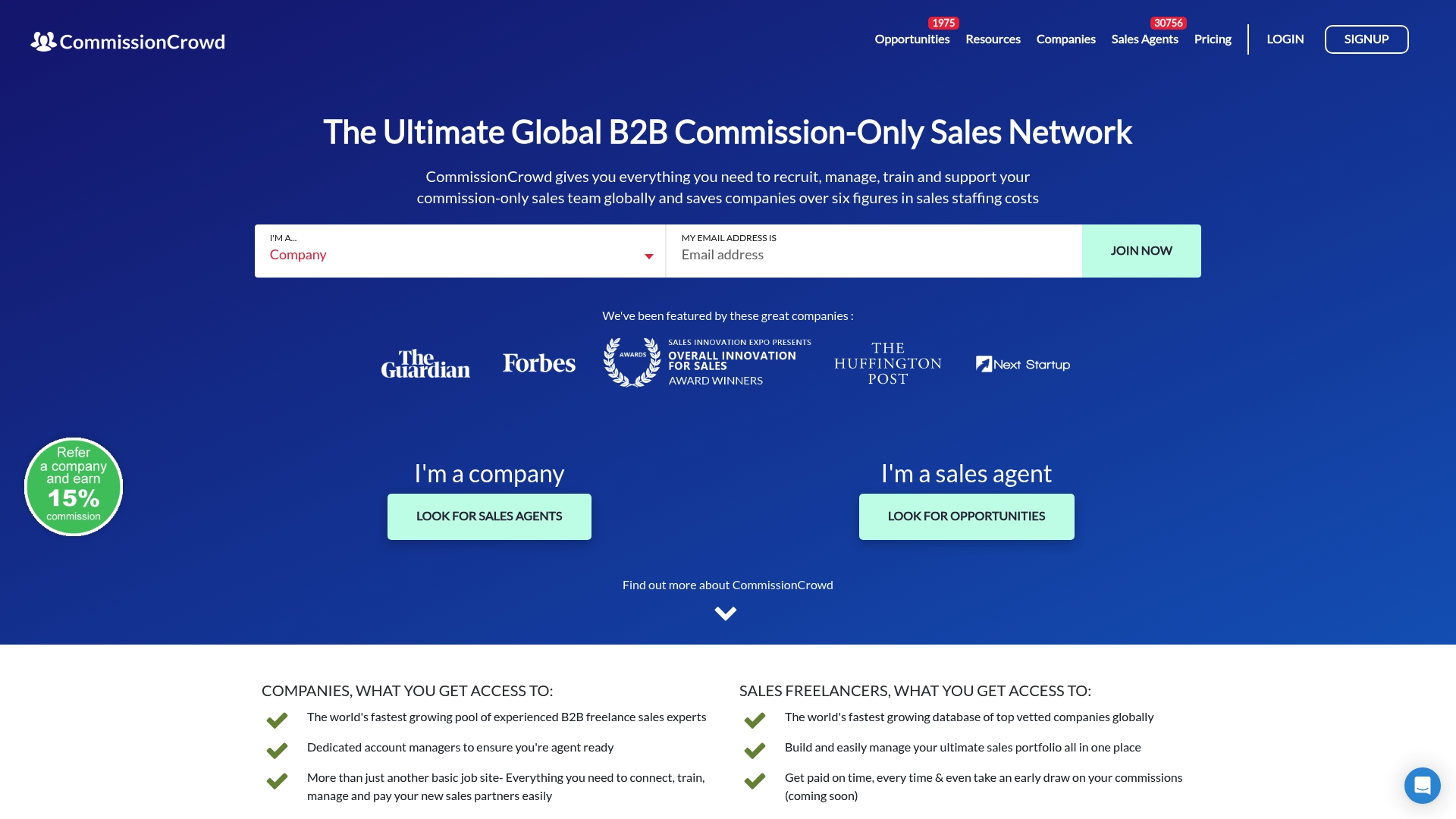
The platform is built specifically for this type of partnership. You can post your sales opportunity and connect with independent reps who already carry complementary lines in your target territories. There are no fixed staffing costs and no long hiring cycles. Commissioncrowd also provides tools to manage rep relationships, track performance, and structure compensation that reflects the realities of your sales cycle.
For reps exploring new lines, the how it works for agents page explains exactly how the platform supports their business. It is the most direct path from understanding the manufacturer rep model to actually building one.
FAQ
What is a manufacturer sales rep?
A manufacturer sales representative is an independent contractor who sells a manufacturer's products to buyers within a defined territory on a commission-only basis. They are not employees and cover their own business expenses.
How much do manufacturer sales reps earn?
Manufacturer reps typically earn between 2% and 10% of net sales in commission, depending on product complexity and margin. This rate is higher than internal sales commissions but carries no payroll or benefits cost for the manufacturer.
How many product lines does a typical manufacturer rep carry?
Most manufacturer reps carry 5 to 8 complementary, non-competing product lines. This allows them to maximize the value of each sales call by offering buyers multiple related solutions.
What should a manufacturer-rep contract include?
A solid rep agreement should clearly define territory, commission rates and payment timing, termination notice requirements, post-termination commission obligations, performance standards, and product liability responsibilities.
How do I find a qualified manufacturer sales rep?
Start by defining the product categories, territories, and buyer types you need covered, then use a platform like Commissioncrowd to access vetted independent reps who already carry complementary lines in your target markets.
Where can I learn more about becoming a successful manufacturer’s rep?
If you are just getting started and are thinking about becoming a Manufacturer's rep, read our full guide here: The Complete Guide to Becoming a Successful Independent Sales Rep or Manufacturer’s Rep

More articles from CommissionCrowd
World-Class Software Engineering Sales Opportunity - 35% Commission + Residuals
World-Class Software Engineering Sales Opportunity - 35% Commission + Residuals
Why You'll Never Find Great Self-Employed Sales Professionals on Gumtree or
Why You'll Never Find Great Self-Employed Sales Professionals on Gumtree or Generic Job Websites